|
Stop Managing Projects. Start Managing Intelligence: Why PMs Are Becoming the Bottleneck Ways of Working, Power Skills, Business Acumen Neil Sahota Chief AI Officer CAIO/Consolidated Analytics & United Nations Advisor |
|
  |
|
|
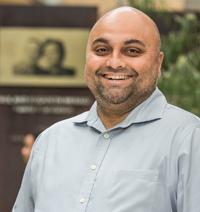
About the Presentation Project managers believe they orchestrate work, but in AI environments, they increasingly slow it down. As AI systems make decisions faster than governance structures can respond, traditional PM practices (status reporting, change control, even stakeholder alignment) create friction instead of clarity. In this session, Neil Sahota reveals how leading organizations are quietly changing from project management to intelligence management, where decisions, risks, and execution evolve continuously without waiting for human checkpoints. Through real-world examples, Sahota shows how teams eliminated reporting cycles, reduced decision latency by over 50%, and redefined the PM role from controller to orchestrator of intelligent systems. Attendees will learn how to redesign their role, workflows, and influence to stay relevant as well as lead in a world where projects no longer wait to be managed. Learning Objectives: 1. Recognize how traditional project management practices are structural bottlenecks in AI enabled organizations. 2. Distinguish between managing tasks and managing intelligence, and why this change determines future PM relevance. 3. Analyze real-world examples where organizations removed PM layers and what replaced them. 4. Redesign personal workflows to reduce decision latency and increase strategic impact within 30–90 days. 5. Position yourself as an intelligence orchestrator rather than a project controller to future-proof your career. About Neil Sahota Neil Sahota is a globally recognized AI strategist, United Nations AI Advisor, and PMI-certified practitioner who challenges how project managers think, decide, and lead. While most PMs treat AI as a tool, Sahota shows why that mindset is already obsolete and how it quietly erodes decision quality, stakeholder trust, and career relevance. He has advised Fortune 500 leaders, governments, and emerging ventures on AI transformation, delivering measurable gains in speed, cost, and outcomes. Sahota equips PMI professionals to move beyond execution into intelligence-driven leadership, where projects don’t just deliver on scope, but continuously learn, adapt, and outperform. His work exposes the hidden gaps in today’s PM practices that, if ignored, will derail even the most experienced professionals. |
|